JOURNAL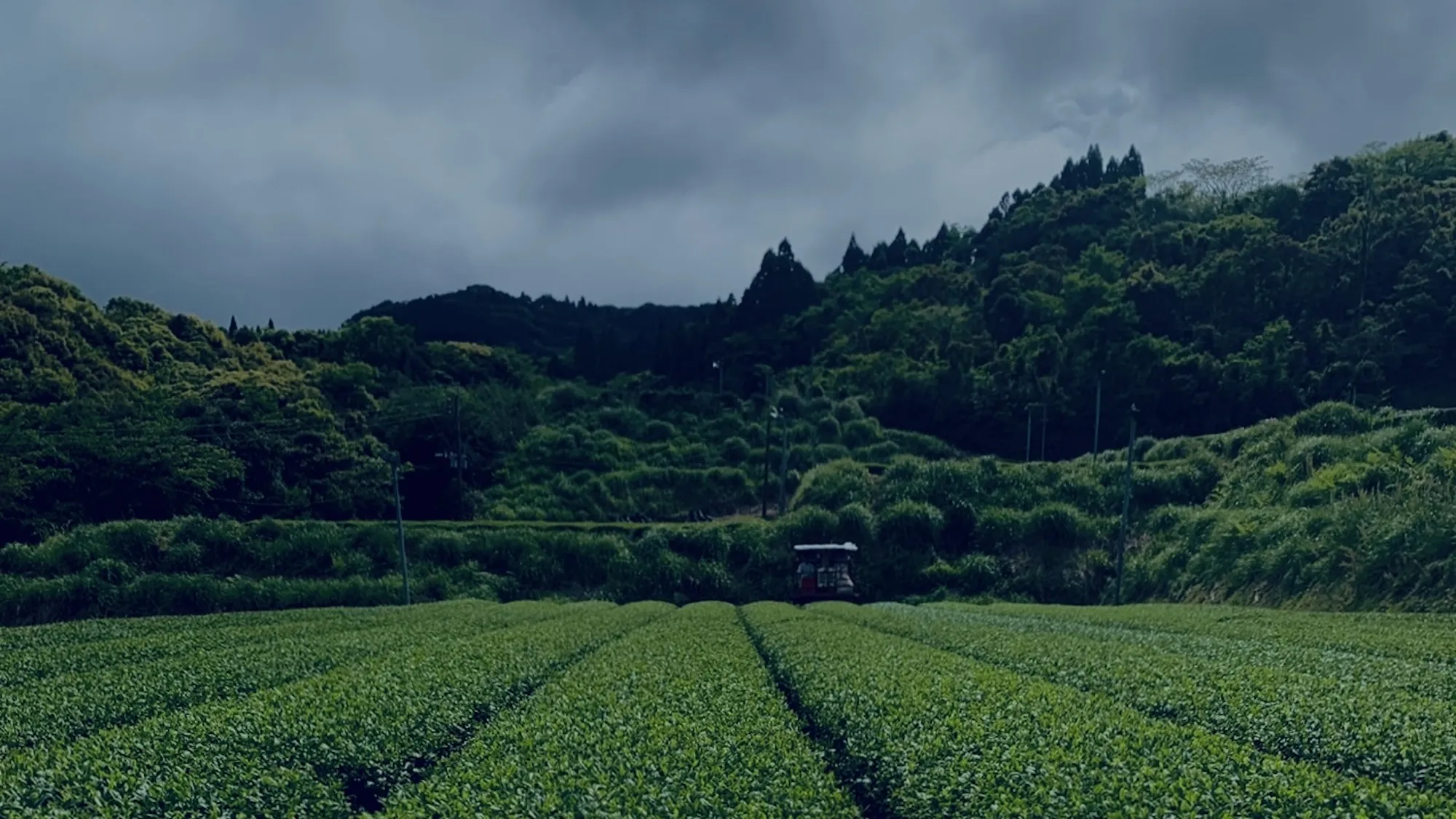
前回、「 なぜ有機玉露なのか 」をお伝えしました。その中で、私たちは「 有機とは何か 」「 玉露とは何か 」という二つの問いを置きました。
今回は、そのもう一つの問いである「 玉露とは何か 」について、お話ししたいと思います。
玉露は、春に芽吹くやわらかな新芽へ、収穫の20日以上前から覆いをかけて育てるお茶です。太陽の光を遮ることで、茶葉は強い日差しを受けずにゆっくりと育ちます。
植物は、光を受けて光合成を行い、成長します。玉露づくりでは、その自然の営みにあえて手を加えます。茶葉の旨味のもとは、テアニンなどのアミノ酸です。日光をたくさん浴びると、その一部は渋みのもとになるカテキンへと変わっていきます。光を抑えることでアミノ酸が保たれ、玉露ならではの濃厚な旨味と、青海苔を思わせる香りが生まれます。
煎茶との大きな違いも、ここにあります。太陽のもとで育つ煎茶には、清々しい香りと爽やかな渋みがあります。一方、覆いの下で育つ玉露には、ふくよかな旨味と、口の中に静かに広がる奥行きがあります。どちらが優れているということではありません。それぞれに、自然の受け取り方と、お茶づくりの技があります。
玉露は、昔から日本茶の最高峰と呼ばれてきました。それは単に希少で高価だからではなく、新芽が最も良い状態になる時を見極め、覆いをかける時期や期間を調整し、摘採へつなげていく、細やかな仕事の積み重ねがあるからです。
そして、玉露にはもう一つ、大切な時間があります。それは、収穫した新茶をすぐに仕上げきらず、ひと夏、半年ほど寝かせる「 熟成 」の時間です。
春に製造したばかりの茶葉には、新茶ならではのみずみずしく青い香りがあります。それもまた魅力ですが、玉露は時間を重ねることで、その青さが少しずつ落ち着いていきます。そして秋、私たちは茶葉を「 封切り 」します。そこで初めて、玉露本来の香りが立ち上がってきます。
海苔を思わせる香り。品種ごとに異なる個性。そして、その茶葉が育った土壌や気候、畑を取り巻く環境の面影。いわゆるテロワールです。そこへ、生産者が一年を通じて茶樹と向き合った技術と想いが重なり、一つの玉露の味わいが形づくられていきます。
玉露の世界は、ワインやウイスキーにも通じるものがあります。良いものほど、時間さえも味わいの大切な要素になっていきます。いや、時間こそが、その本質なのかもしれません。
私たちOOTCが目指しているのは、ただ濃い旨味を追い求めることではありません。何杯でも飲みたくなる、やわらかく澄んだ味わい。茶葉が本来持つ個性を生かしながら、飲む方の心に静かに残る玉露を届けたいと考えています。
時を重ねた本物の味。それが、玉露なのです。
次回は、この玉露を「 有機 」で育てるとはどういうことか。有機農業の考え方についてお伝えします。
Last time, I wrote about why we make organic gyokuro. In that piece, I set out two questions: what is organic, and what is gyokuro?
This time, I would like to turn to the other question: what is gyokuro?
Gyokuro is a tea whose soft spring shoots are covered for 20 days or more before they are picked. With the sun held back, the leaves grow slowly, sheltered from strong light.
Plants take in light, photosynthesize, and grow. In making gyokuro, we deliberately step into that natural process. The umami of tea comes from amino acids such as theanine. In strong sunlight, part of them turns into catechins, the source of astringency. By holding back the light, the amino acids stay in the leaf, and gyokuro gains its deep umami and an aroma that recalls green nori seaweed.
This is also the main difference from sencha. Sencha, grown in full sun, has a fresh aroma and a clean, bracing astringency. Gyokuro, grown under cover, has a round umami and a depth that spreads quietly across the palate. Neither is better than the other. Each has its own way of receiving nature, and its own craft.
Gyokuro has long been called the pinnacle of Japanese tea. Not simply because it is rare or expensive, but because of the careful work behind it: judging the moment the new shoots are at their best, adjusting when and how long to cover them, and carrying all of that through to the harvest.
Gyokuro also needs one more important stretch of time. Rather than finishing the new tea right after harvest, we let it rest through the summer, for about half a year. This is the time of aging.
Leaves made in spring have the fresh, green aroma that only new tea has. That is part of its charm, but with time, the greenness of gyokuro gradually settles. Then, in autumn, we break the seal. Only then does the true aroma of gyokuro rise.
An aroma that recalls nori. A character that differs with each cultivar. And traces of the soil, the climate and the surroundings where the leaves grew. This is what is called terroir. Layered on top are the skill and care of growers who have tended their tea plants all year. Together, they shape the taste of a single gyokuro.
In this, the world of gyokuro has something in common with wine and whisky. The finer the product, the more time itself becomes part of the flavor. Perhaps time is the very essence of it.
What we at OOTC are aiming for is not simply a stronger umami. It is a soft, clear taste that makes you want cup after cup. We want to deliver a gyokuro that brings out the character of the leaves and stays quietly with the person who drinks it.
A taste that has matured with time. That is gyokuro.
Next time, I will write about what it means to grow this gyokuro organically, and about the thinking behind organic farming.


 PRODUCT